
Forté IQ
The Edge Revolution
Why Micro Data Centers are Essential for 5G and IoT
Pranay Kashyap, Marketing Specialist
07:46, 16 February 2026
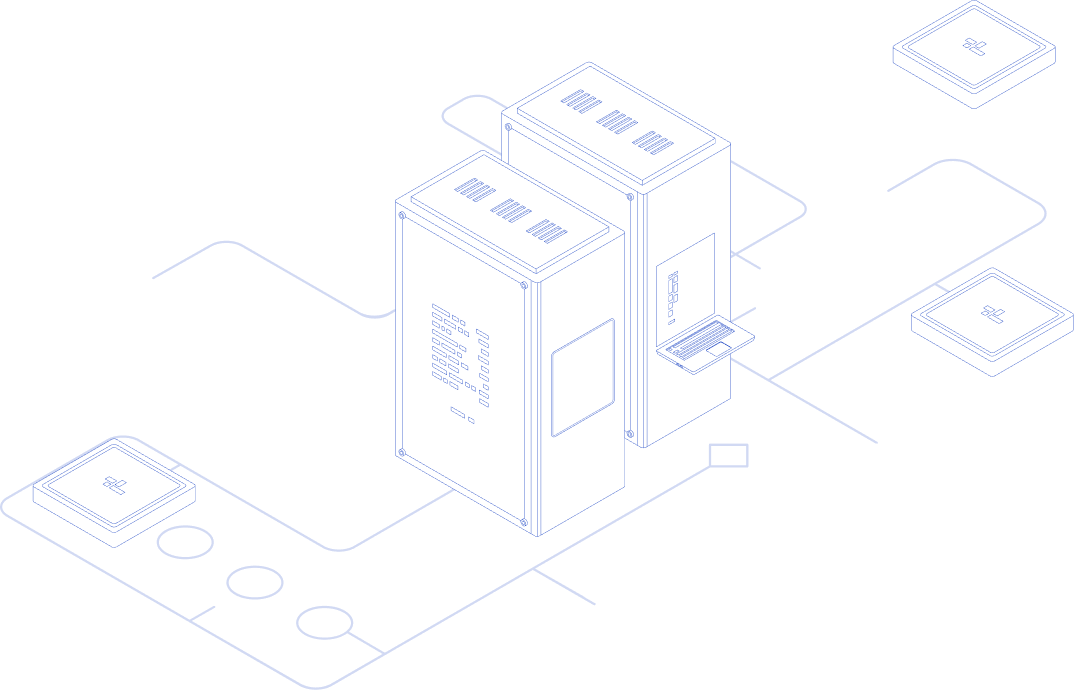
Micro Data Center
For decades, the central cloud has reigned supreme, consolidating massive amounts of compute and storage into a few dozen global hubs. However, the future—driven by hyper-fast 5G networks and massive Internet of Things (IoT) deployments—is running headfirst into a physical reality: the speed of light is too slow.
When mission-critical data must travel hundreds of miles from a sensor to a centralized data center and back, the resulting delay, or latency, can be measured in tens or hundreds of milliseconds. In an era of autonomous vehicles, robotic surgery,and high-frequency industrial automation, that delay is not just an inconvenience; it is a guarantee of failure.
The solution is not "faster" wires, as fiber optic speeds are already approaching physical limits. The solution is removing the distance. This is the core mission of the Micro Data Center (MDC), a technology that is transforming computing from a centralized resource into a distributed, spatial utility.
For decades, the central cloud has reigned supreme, consolidating massive amounts of compute and storage into a few dozen global hubs.
Latency is the New Distance Barrier
The Physics of the "Speed of Light" Bottleneck
Even in a perfect vacuum, light travels at approximately 300,000 kilometers per second. In fiber optic glass, it is roughly 30% slower. For every 100 miles of distance, a signal takes approximately 1ms to travel and return.
-
The Human Threshold: Humans perceive "real-time" interaction at around 100ms. We can tolerate this on a Zoom call or while browsing a website.
-
The Machine Threshold: An autonomous vehicle traveling at 60 mph moves nearly 3 feet in 30ms. If a sensor detection must be processed by a cloud server 500 miles away, the car has already traveled several feet before the "brakes" command is even calculated.
Micro Data Centers solve this by placing compute power at the "Provider Edge" or "User Edge," effectively reducing the physical travel distance from hundreds of miles to just a few hundred meters.

The Micro Data Center
The Micro Data Center: A Self-Contained Ecosystem
An MDC is not merely a "server in a box." It is a ruggedized, self-sufficient, and modular compute platform that replicates the entire infrastructure of a hyperscale facility in a footprint the size of a refrigerator or a shipping container.
Key Engineering Differentiators:
- Thermal Resilience & Advanced Cooling: Because MDCs are often placed in "dirty" environments like factory floors or hot city street corners, they cannot rely on traditional building HVAC. Many MDCs now utilize sealed-loop liquid cooling or phase-change materials to manage high-TDP (Thermal Design Power) AI chips in an enclosure with no external airflow.
- Physical Security & Hardening: These units feature IP65-rated enclosures to protect against dust, moisture, and extreme temperature swings. Furthermore, because they are often in public or semi-public spaces, they incorporate "tamper-evident" physical security and hardware-rooted encryption to prevent data theft via physical access.
- Autonomous Power Management: Every MDC integrates its own Uninterruptible Power Supply (UPS) and lithium-ion battery backup. In more advanced deployments, they are connected to local micro-grids or renewable sources (like solar arrays on cell towers) to maintain operation during grid failures.
The 5G and IoT Synergy
The 5G and IoT Synergy: Creating Localized Data Loops
5G is more than just a faster version of 4G; it is a software-defined network that supports Network Slicing—the ability to reserve a specific "lane" of the network for ultra-reliable, low-latency communication. However, 5G only solves the wireless leg of the journey. Without an MDC at the end of that wireless jump, the low latency of 5G is wasted.
The Application Ecosystem:
|
Application |
Why it Needs an MDC |
Target Latency |
|
Industrial IoT (IIoT) |
Local processing for "Computer Vision" on assembly lines to detect defects in milliseconds. |
< 5ms |
|
Autonomous Vehicles |
Offloading complex LiDAR processing from the car's onboard computer to a roadside MDC. |
< 10ms |
|
Smart Cities |
Analyzing thousands of 4K camera feeds locally to manage traffic flow without clogging metropolitan fiber. |
< 30ms |
|
Cloud Gaming / XR |
Rendering high-fidelity 3D graphics near the user to prevent "motion sickness" in VR headsets. |
< 20ms |
Operationalizing
Operationalizing the "Far Edge"
The challenge of the Edge Revolution is one of scale. Moving from 10 centralized facilities to 10,000 distributed MDCs requires a complete overhaul of IT operations:
-
Zero-Touch Provisioning (ZTP): MDCs must be "plug-and-play." Once powered on and connected to fiber, they must automatically download their configurations and join the global network without a technician being present.
-
AI-Driven Orchestration: With thousands of units to manage, human monitoring is impossible. AI-powered "Orchestrators" constantly move workloads between MDCs based on where the users are. If a stadium fills up for a concert, the network dynamically shifts compute power to the MDCs nearest that stadium.
-
Predictive Maintenance: Sensors inside the MDC monitor fan speeds, battery health, and humidity. If a component is likely to fail, the system proactively routes data to a neighboring MDC and schedules a repair before an outage occurs.
Conclusion: The Ubiquitous Fabric
The Micro Data Center represents the final step in the democratization of data. By embedding compute power within the physical fabric of our cities and industries, we are moving beyond the "Cloud" as a destination and toward the "Edge" as an environment.
This architectural shift finally frees 5G and IoT from the physical constraints of distance. As MDCs become as common as streetlights or cellular towers, the digital world will finally become truly real-time, enabling a new generation of technologies that were previously impossible due to the simple, stubborn speed of light.
The Micro Data Center represents the final step in the democratization of data
Further Reading
Related insights
Expert analysis, market trends, and professional guidance from the world's leading data center specialists.
Why Automation Is Reshaping Modern Data Center Roles
Adapting to Change: The New Skills and Roles Emerging as Data Centers Embrace Automation
Mainak Poddar, Marketing Specialist
High Demand Data Center Careers for Future Professionals
Why the data center industry may be the most overlooked career opportunity of our time.
Mainak Poddar, Marketing Specialist
How AI Is Creating New Data Center Career Options
AI is expanding the scope of infrastructure roles — creating specialist opportunities that barely existed three years ago.
Mainak Poddar, Marketing Specialist
Explore All Further Reading
Access comprehensive expert analysis, real-time market intelligence, actionable career guidance, and in-depth technical insights from DC Forté's global community of data center specialists, industry thought leaders, and Advisory Board members. New insights published weekly across careers, technology, market trends, and sustainability topics.
Ready to Lead, Not Follow?
Join the professionals who read it on Forté IQ first.
Trusted by 150,000+ data center professionals worldwide