
Forté IQ
Cybersecurity in AI Data Centers
New Threats and Defense Strategies
Pranay Kashyap, Marketing Specialist
12:08, 07 April 2026
Expanded Attack Surface
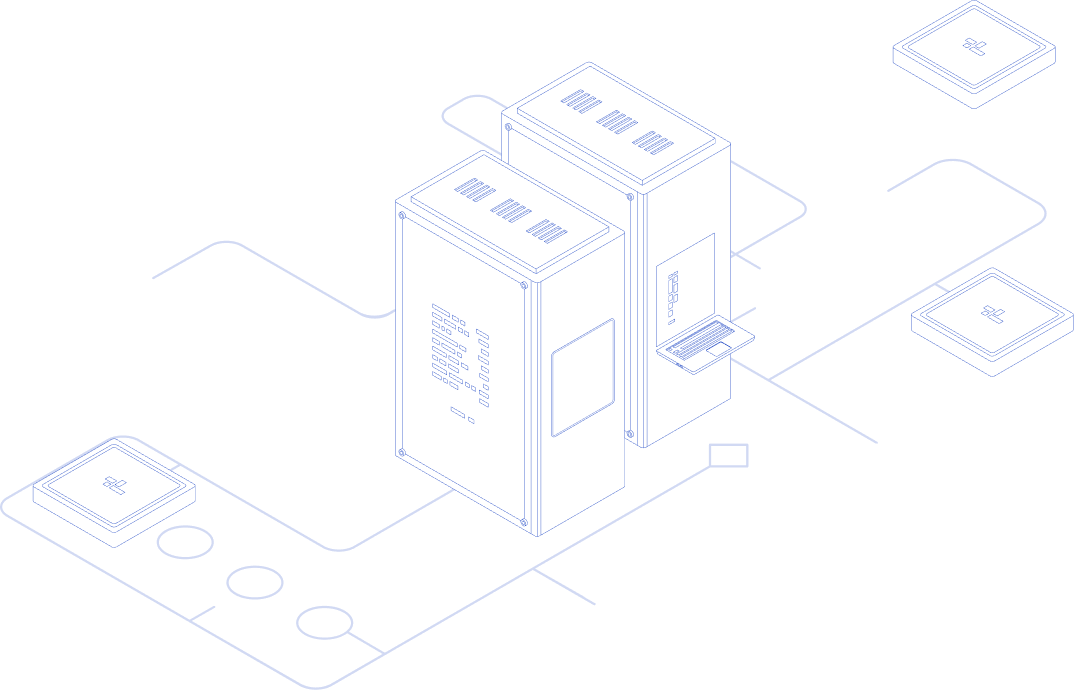
The modern data center, designed for the extreme demands of Artificial Intelligence (AI) and High-Performance Computing (HPC), is a fortress of power and density. However, the very architectural innovations that enable AI—massive liquid-cooling loops, high-density power distribution, and highly distributed edge nodes—have created an Expanded Attack Surface.
Securing the AI Data Center requires a fundamental paradigm shift: moving from simply protecting "data at rest" to protecting the entire compute lifecycle. This includes the veracity of the AI models, the integrity of the supply chain, and the physical stability of the facility's life-support systems.
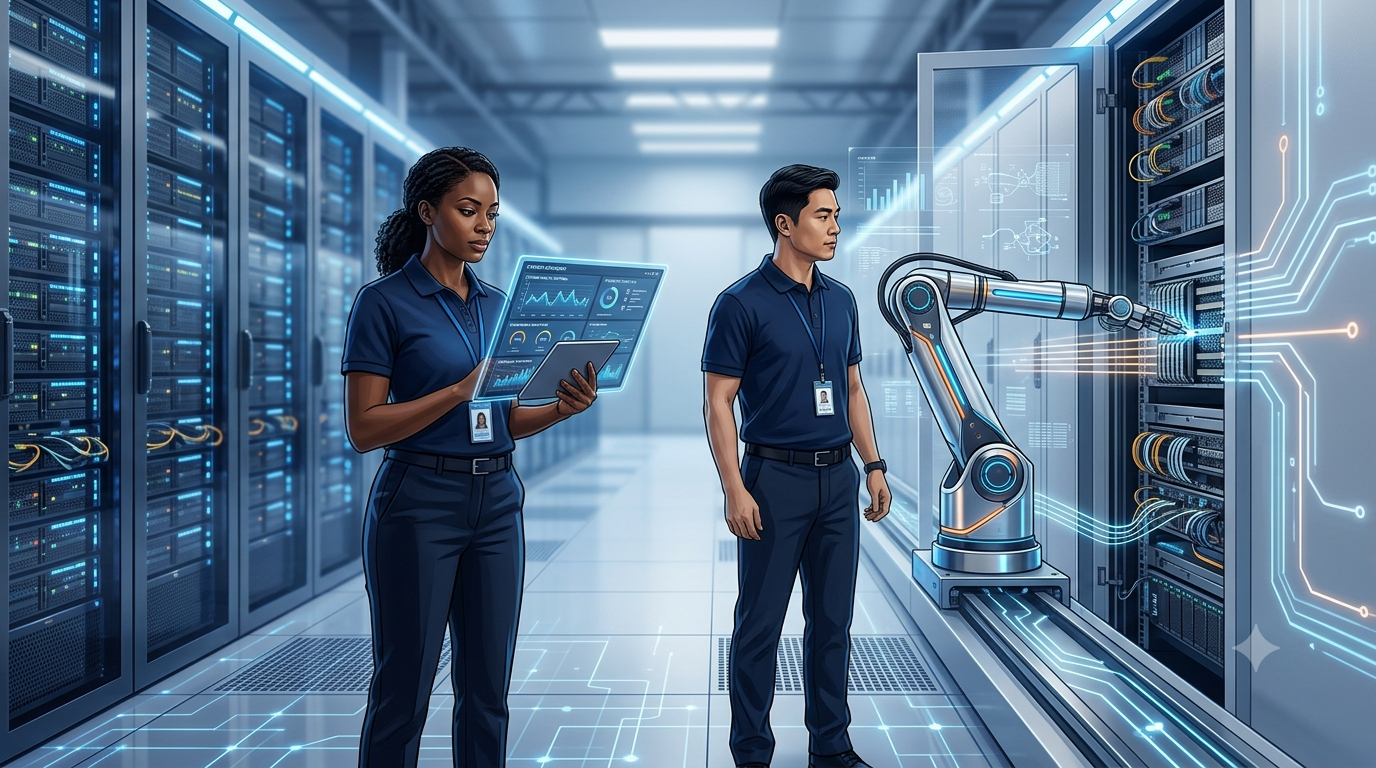
The modern Data Center, designed for the extreme demands of Artificial Intelligence (AI) and High-Performance Computing (HPC), is a fortress of power and density
The Converged Attack Surface
Where IT Meets OT
The most significant shift in AI Data Center security is the blurring line between Information Technology (IT) and Operational Technology (OT). In a standard enterprise environment, a server hack results in data theft. In an AI data center, a hack of the facility's control systems can result in physical hardware destruction.
A. The Physical Core: Thermal and Power Weaponization
The shift to high-density cooling (Direct-to-Chip and Immersion) introduces "wet" vulnerabilities that did not exist in air-cooled facilities.
-
Thermal Logic Bombs: Advanced cooling systems rely on Coolant Distribution Units (CDUs) and automated valves managed by a Building Management System (BMS). A sophisticated attacker who gains lateral access to the BMS can manipulate the cooling set-points. By subtly reducing flow rates or increasing temperatures in a specific "aisle" of AI racks, an attacker can trigger a synchronized thermal runaway, causing millions of dollars in hardware damage and months of downtime without ever touching the actual data.
-
Power Grid Cascading: High-performance AI clusters draw massive, variable loads. An attacker targeting the power management software could orchestrate a "load-shedding" attack, rapidly cycling the power to high-value GPU clusters. This creates electrical transients that can overwhelm Uninterruptible Power Supplies (UPS) and switchgear, leading to catastrophic facility-wide outages.
- Defense Strategy: Implement Network Air-Gapping between the IT production network and the facility OT network. Every sensor in a cooling loop should be treated as a Zero-Trust endpoint, requiring cryptographic authentication before its data is accepted by the DCIM (Data Center Infrastructure Management) system.
The Distributed Edge
The Unsecured Frontier
As AI inference moves to the Edge, placing micro-data centers in cell towers, warehouses, and retail hubs, the security perimeter dissolves.
-
The "Island Attack" Vector: Unlike a Hyperscale facility with armed guards and biometric man-traps, an Edge node might be a ruggedized box in a remote location. If an attacker gains physical access to an Edge node, they can perform side-channel attacks (measuring power consumption or electromagnetic leaks) to extract encryption keys. Once one node is compromised, it can be used as a "trusted" jumping-off point to attack the central cloud.
-
Firmware Fragmentation: Managing the security posture of 10,000 distributed Edge devices is a logistical nightmare. Unpatched firmware on a single network interface card (NIC) at the Edge becomes a permanent backdoor.
- Defense Strategy: Utilize Hardware Root of Trust (RoT). By embedding a Trusted Platform Module (TPM) or Secure Element (SE) chip into the Edge hardware, the system can perform a "Secure Boot." This ensures that the device will only execute code that has been digitally signed by the provider, effectively neutralizing "man-in-the-middle" firmware attacks.

The AI Model Layer
Intellectual Property at Risk
The most valuable asset in the modern data center is no longer the customer database; it is the Trained Model Weights. These represent billions of dollars in R&D and are the primary targets of modern industrial espionage.
Model Theft and Exfiltration
Attackers are moving beyond traditional file theft to Model Inversion. By sending thousands of specific queries to a deployed AI model and analyzing the responses, an attacker can "reverse-engineer" the underlying model architecture and weights. This allows them to clone a proprietary AI without ever breaching the server's file system.
Data Poisoning and Adversarial Attacks
-
Supply Chain Poisoning: If an attacker can inject malicious data into the massive datasets used for training (often scraped from the web), they can create a "backdoor" in the AI's logic. For example, a facial recognition model could be "poisoned" to ignore anyone wearing a specific, inconspicuous pattern on their shirt.
- Adversarial Perturbation: During the inference phase, an attacker can apply "noise" to an input—such as a sticker on a stop sign—that is invisible to humans but causes the AI to misclassify the object entirely.

Moving Toward a Proactive Defense Strategy
Multi-Layered Security Architecture
To defend this complex environment, Data Center operators must move beyond legacy firewalls and embrace a Multi-Layered Security Architecture:
|
Defense Layer |
Strategy |
Technical Implementation |
|
Physical/Facility |
OT Isolation |
Air-gapped VLANs for BMS/DCIM with hardware-level encryption. |
|
Hardware |
Root of Trust |
Mandatory TPM 2.0 chips for all servers and Edge nodes. |
|
Network |
Micro-Segmentation |
"East-West" traffic filtering that prevents one GPU rack from talking to another without authorization. |
|
Model |
Differential Privacy |
Adding "mathematical noise" during training to prevent Model Inversion attacks. |
Conclusion: Security as an Engineering Discipline
Cybersecurity in the AI Data Center is no longer a peripheral IT function; it is a converged engineering challenge. As we build the infrastructure of the future, we must recognize that the "attack surface" now includes the very pipes carrying coolant and the very electrons powering the racks.
By shifting to Zero-Trust Architectures and focusing on Hardware-Rooted Security, operators can ensure that the AI revolution is built on a foundation of resilience. In the era of high-density compute, the best defense is not a higher wall, but a smarter, more integrated system that assumes every component, from the chip to the chiller, is a potential target.
Cybersecurity in the AI Data Center is no longer a peripheral IT function
Further Reading
Related insights
Expert analysis, market trends, and professional guidance from the world's leading data center specialists.
Top Countries Hiring Data Center Experts and Engineers
Where the Global Data Center Talent Race Is Heating Up in 2026
Mainak Poddar, Marketing Specialist
Why Automation Is Reshaping Modern Data Center Roles
Adapting to Change: The New Skills and Roles Emerging as Data Centers Embrace Automation
Mainak Poddar, Marketing Specialist

High Demand Data Center Careers for Future Professionals
Why the data center industry may be the most overlooked career opportunity of our time.
Mainak Poddar, Marketing Specialist
Explore All Further Reading
Access comprehensive expert analysis, real-time market intelligence, actionable career guidance, and in-depth technical insights from DC Forté's global community of data center specialists, industry thought leaders, and Advisory Board members. New insights published weekly across careers, technology, market trends, and sustainability topics.
Ready to Lead, Not Follow?
Join the professionals who read it on Forté IQ first.
Trusted by 150,000+ data center professionals worldwide